
Introduction
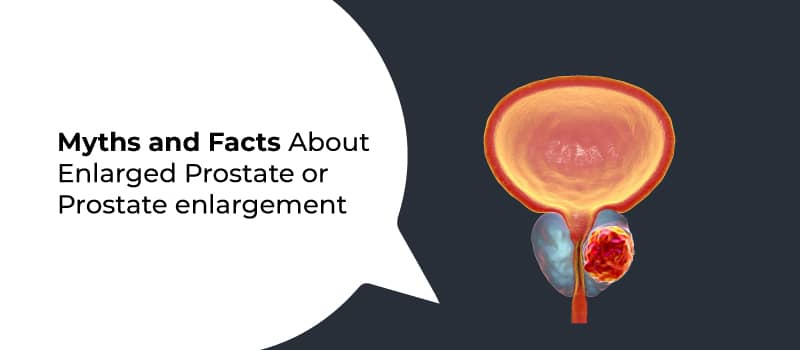
The prostate gland is located beneath the bladder and encompasses the urethra. When its size increases, it creates blockage to the flow of urine from the urinary bladder. An enlarged prostate can cause difficulty in passing urine, needing to strain, urine retention, incontinence, and even increase your urge to urinate frequently, especially in the night. According to a survey, BPH affects nearly 50% of men between the ages of 51 and 60, 70% of men aged 60 to 69, and around 80% of men over 70 years of age.
What is an enlarged prostate?
Prostate is an accessory male reproductive organ. The primary function of the prostate is to manufacture fluids that, along with the sperm and fluids from other male reproductive glands, make the semen. It increases in size during puberty as a part of your growth spurt. However, after you turn 50, your prostate gland again increases in size, although its function gradually decreases. Then what is an enlarged prostate? Simply put, it is the increase in the size of the gland due to hormonal changes that your body undergoes as you age. As you grow older, the levels of testosterone drop, and it can affect the size of the prostate.
What are the facts and myths associated with an enlarged prostate?
Several common misconceptions are associated with BPH, and some of these are as follows:
-
-
Myth: BPH is cancerous
-
This is a myth, as the name benign prostatic hyperplasia or BPH itself suggests that it is non-cancerous. Although the symptoms of BPH and prostate cancer are similar, in the case of prostate cancer there will be a cancerous growth of the gland. An enlarged prostate does not have any cancerous growth in the gland.
-
-
Fact: BPH is quite common
-
BPH can occur as part of the normal progression of age. It starts affecting men over the age of 50. The gland is close to the bladder and urethra, so its size increases pressure on the bladder. As a result, emptying your bladder will become difficult, and you will feel increased frequency and urge.
-
-
Myth: All BPH requires surgery
-
This is a common misconception. In the case of BPH, you must consult a renowned urologist. In most cases, the problem is manageable with medicines and lifestyle modifications. Only if the enlarged prostate creates severe medical problems, the doctor will suggest for surgery.
-
-
Fact: Enlarged prostates can create serious health problems
-
If left untreated, you will find that an enlarged prostate can lead to serious health issues. It can cause repeated troublesome urinary tract infections (UTIs), bleeding in the urine and stones in bladder. If prostate enlargement is neglected, it can lead to permanent bladder damage and kidney damage. If BPH causes troublesome symptoms, you must consult a urologist to diagnose the problem and get suitable treatment.
What are enlarged prostate symptoms?
If you have the following enlarged prostate symptoms, you must consult with a urologist at the earliest:
- Increase in the frequency of urination at night
- Increased daytime urine frequency
- Urgency and urinary incontinence
- Burning sensation while passing urine
- Delayed start of urination
- Poor stream of urine
- Sense of incomplete urination
- Interrupted stream
What causes enlarged prostates?
The actual cause of an enlarged prostate remains unknown. However, some studies show that age is the most common factor in an enlarged prostate. As you grow older, the levels of testosterone drop, but estrogen remains the same. This can result in the enlargement of the prostate. Another study suggests that older men have higher levels of dihydrotestosterone (DHT), which is a hormone that supports prostate growth.
Which foods should I avoid with an enlarged prostate?
Some of the foods to avoid with an enlarged prostate are as follows:
- Alcohol can increase your urge to urinate.
- Foods with high sodium content, as this will create an unnecessary burden on the urinary system.
- You must avoid processed and spicy foods, as these contain chemicals that can create a burning sensation while passing urine.
- Avoid carbonated drinks, and it can increase the symptoms associated with an enlarged prostate.
What is the best treatment for an enlarged prostate?
The initial treatment for prostate problems will be lifestyle modifications, medications and management of the symptoms. If there is a need for surgical intervention, you might be suggested for an endoscopic procedure for clearance of the blockage. One of the best treatment modality which has been there for several decades is transurethral resection of the prostate (TURP), where the enlarged tissue of the prostate gland is removed with a wire loop. The latest and most advanced surgical intervention for enlarged prostate is Laser surgery (HoLEP) where the safety margins and efficiency is the best.
What is the latest treatment for an enlarged prostate?
The latest treatment for enlarged prostates entails the usage of latest technology of lasers. This laser procedure for prostate also known as HoLEP – Holmium enucleation of prostate, uses the latest technology to maximise the safety and efficiency of the surgical intervention. It is especially advantageous in patients who are having cardiac problems and are on blood thinning medications. It is minimally invasive with minimal blood loss and helps improve urine flow significantly.